
Rocky Point & Long Island Orthodontics
Early Orthodontics in Rocky Point, NY
STARTING EARLY, DONE RIGHT
Why Age 7 is the Magic Number.
The American Association of Orthodontists recommends that every child have their first orthodontic screening by age 7. That doesn’t mean treatment starts that early. It means we can take a look at how your child’s teeth and jaw are developing and catch any potential issues while they’re still easy to address.
Most kids who come in at 7 don’t need treatment right away. But for the ones who do, early intervention can make a real difference. Addressing certain problems while the jaw is still growing can simplify or even prevent the need for more involved treatment down the road.”
What is Early Orthodontic Treatment?
Early orthodontic treatment, sometimes called Phase 1 treatment, refers to orthodontic care that begins while your child still has a mix of baby teeth and adult teeth. The goal isn’t to straighten every tooth right away. It’s to guide jaw growth, create room for incoming adult teeth, and correct developing issues before they become more complex.
Common early treatments include palate expanders to widen a narrow upper jaw, space maintainers to hold gaps open when baby teeth are lost too early, and appliances that help correct bite issues or habits like prolonged thumb sucking. The specific approach depends entirely on what your child needs.
Not every child requires Phase 1 treatment. In many cases, the best course of action is simply monitoring your child’s development over time and starting treatment later when all or most of their adult teeth have come in. We’ll never recommend treatment unless there’s a clear benefit to starting early.
Signs Your Child May Benefit From Early Orthodontics
Most parents aren’t expected to diagnose orthodontic issues on their own. That’s what the screening is for. But there are a few things worth keeping an eye on that could signal it’s time to bring your child in for a look.
Adult teeth coming in crooked or overlapping
Crossbite, underbite, overbite, or open bite developing early
Thumb sucking or tongue thrust continuing past age 5
Baby teeth lost too early, too late, or in an unusual pattern
Does Early Treatment Mean my Child Won't Need Braces Later?
Sometimes, but not always. Early treatment is designed to address specific issues at the right time, and in some cases that’s enough. In other cases, a second phase of treatment with braces or aligners is needed once all the adult teeth have come in.
The advantage of starting early is that Phase 2, if it’s needed, is usually shorter, simpler, and more predictable. By guiding jaw growth and creating space early on, we’re setting your child up for the smoothest possible path to a healthy smile, even if that path includes braces later.
Every child is different, and we’ll be upfront about what we think your child needs and what can wait. The consultation is a low-pressure way to get a clear picture of where your child stands and what, if anything, makes sense to address now.
Patient experiences
Hear it from real patients
Walking into an orthodontist's office can feel intimidating, especially for the first time. We hear that a lot from new patients. We also hear that the reality is nothing like what they expected. Here's what families across Long Island have to say about their experience at our office.
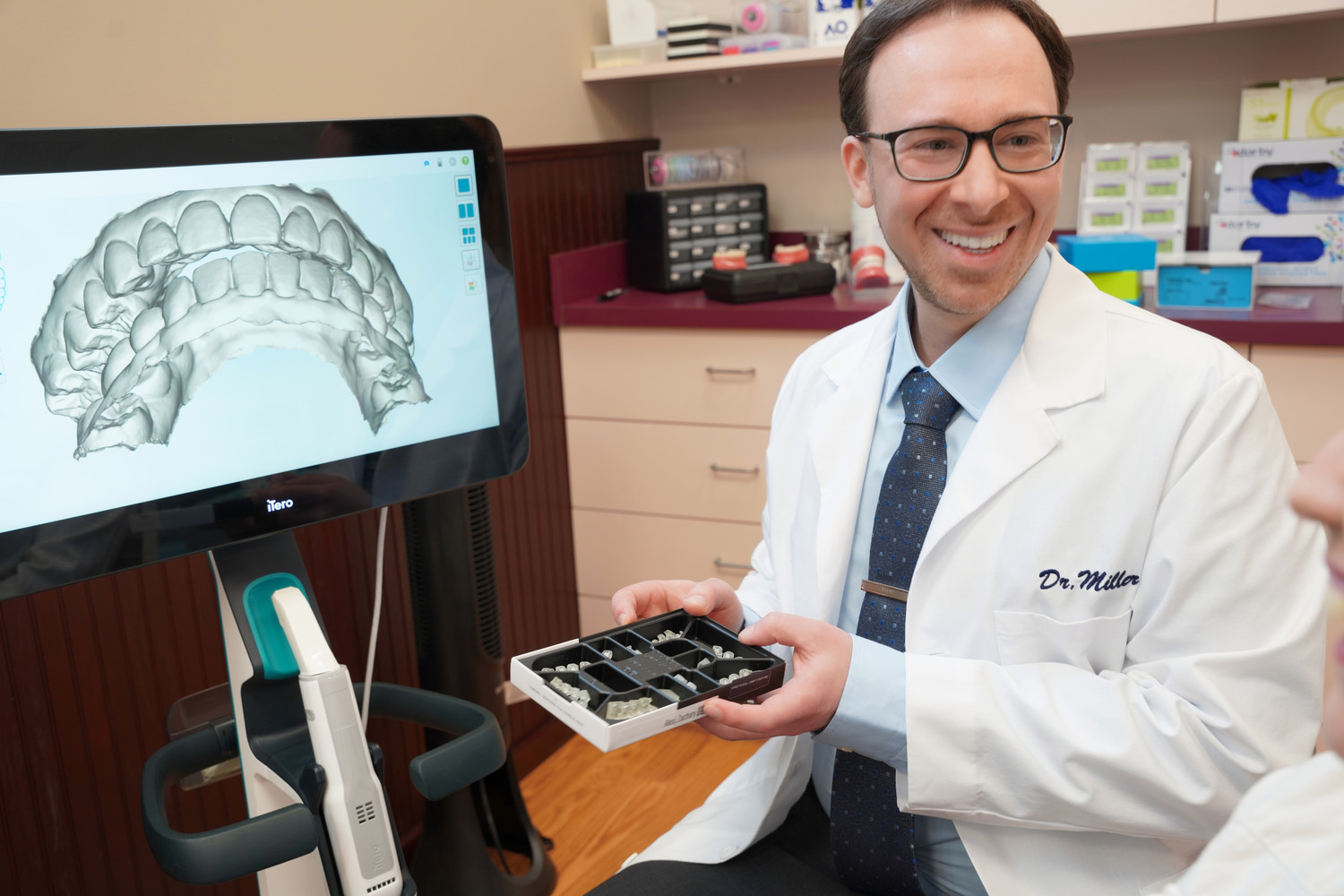
Dr. Miller and his staff are by far the kindest and most professional in the business. They put any concerns to ease immediately.
Such a pleasure, from Lori Ann at the front desk to Dr. Miller himself. Kind, compassionate, and they really take the time to care for patients.
Dr. Miller and his staff are extremely friendly, informative, and helpful. They made my Invisalign experience completely seamless.
Dr. Miller was so kind, and his assistant speaks Spanish, my first language. That made me feel much more comfortable. Excellent staff!
My daughter needed emergency treatment and he took her right away. The office is inviting and his bedside manner was impeccable.
From the beginning they made me feel comfortable and well informed at every step. Dr. Miller's attention to detail is incredible, and my results speak for themselves.
Wonderful staff and a clean, inviting environment. Dr. Miller went above and beyond to make sure I was happy. I hope to be a lifelong patient!
What a great experience. The staff are friendly, professional, and work with your financial needs. Dr. Miller went above and beyond.
Love the family atmosphere. I'd recommend this place to anyone nervous about getting braces. They go above and beyond to make you comfortable.
Amazing experience! The staff is so welcoming and kind, and my smile has never looked better.
Good to Know
Questions? We've got answers
Answers to the questions we hear most from new patients, from cost and comfort to what treatment is really like.
When should my child start with early orthodontics?
By age 7, enough adult teeth have come in for us to spot developing issues with jaw growth, spacing, and bite alignment. That doesn't mean treatment starts at 7. It just means we can catch problems early when they're easier and less expensive to address.
What is Phase 1 treatment?
Phase 1 is early orthodontic treatment that happens while your child still has a mix of baby and adult teeth. It focuses on guiding jaw growth and creating space for adult teeth, using appliances like palate expanders or space maintainers. It's not full braces. It's targeted work on specific issues.
Will my child still need braces after early treatment?
It depends on the case. Some children only need Phase 1. Others benefit from a second phase once all their adult teeth have come in. The advantage is that Phase 2, if needed, is usually shorter and less complex because the early work has already laid the groundwork.
What are the signs my child may need early orthodontics?
Common signs include crowding, crossbite, difficulty chewing, mouth breathing, and prolonged thumb sucking. But many issues aren't visible to parents at all, which is why the screening is so valuable. We'll let you know if anything needs attention or if it's fine to wait.
How long does Phase 1 treatment take?
Most Phase 1 treatment lasts between 6 and 12 months, depending on what's being corrected. After that, your child transitions into a monitoring phase where we keep an eye on development as their remaining adult teeth come in.
What happens at my child's first visit?
We take a look at your child's teeth, jaw, and overall development. The visit is quick, comfortable, and designed to be a positive experience for kids. You'll leave with a clear picture of where things stand and whether any treatment is recommended now or down the road.
Still have a question? Give us a call at (631) 744-8400, we're always happy to help.